Family promised judge no repeat crimes decades before Horsch missing women probe
Federal records show Horsch’s father and wife pleaded for leniency in 1985, calling him repentant, while agents had already found lab equipment at his Hunting Park garage in 1977.
By Mei Lin ·
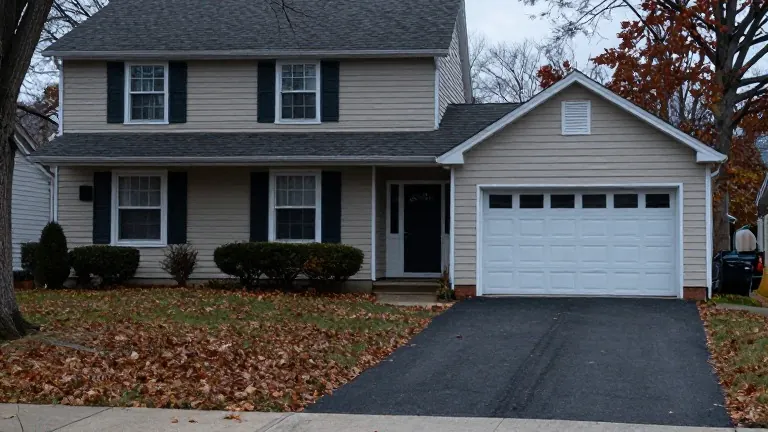
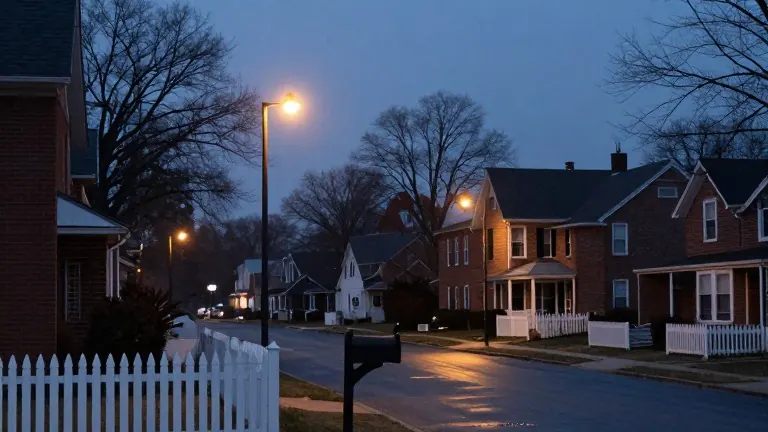
Federal records obtained by the NBC10 Investigators reveal that Raymond Horsch’s family pleaded for a reduced sentence in the mid-1980s, promising a judge there would be no future illegal activity. The documents surface nearly 50 years before police focused on Horsch’s former Olney home in the investigation of seven missing women. Authorities have since recovered chemicals and laboratory equipment from the property that resemble items found in Horsch’s residence decades earlier.
In a letter to a federal judge, Raymond Horsch Sr., described his family as close-knit, law-abiding, and religious. He stated that his son was the first to tarnish the family name. Horsch’s then-wife, Anna Horsch, wrote directly to the court to assure the judge that her husband had changed. She declared, “There will be no recurrence of illegal activity, of that I can assure Your Honors.” These letters accompanied a request for a reduced sentence following Horsch’s guilty plea.
The family’s appeal followed a psychological evaluation requested by Horsch’s public defender. The psychologist described Horsch as highly intelligent and suspicious. The report noted that Horsch was deeply concerned about losing control. The evaluation identified his wife and son as central to his potential rehabilitation. The records show the evaluation took place on March 25, 1985, and lasted approximately four hours.
During the session, Horsch was defensive and evasive. He told the psychologist, “I can’t answer questions honestly.” He expressed suspicion that the examiner might misrepresent him. Horsch said, “I’m suspicious of you. I don’t know you or how your mind works.” The psychologist wrote that Horsch gradually developed some trust as the evaluation continued. However, he tried to minimize the significance of his criminal activity, calling his earlier crimes “stupid.”
The evaluation diagnosed Horsch with bipolar disorder, manic, in remission, and paranoid personality disorder. The psychologist noted that Horsch devoted significant energy to maintaining equilibrium and control. Horsch explained his lack of excessive drug or alcohol use by stating, “I can’t stand being out of control.” The report documented that Horsch held more than 20 jobs in approximately 20 years. He worked as a chemist, computer analyst, and photographer. Testing recorded a full-scale IQ of 140.
Federal interest in Horsch began in the 1970s. In 1974, the U.S. Secret Service arrested Horsch in Hatboro for possessing and passing counterfeit $10 bills. A federal judge sentenced him to two years in prison. After his release, Horsch worked as a chemist and became the subject of a DEA investigation. In February 1977, agents executed a search warrant at a garage on North Sixth Street in Hunting Park. Agents found substantial laboratory equipment and various chemicals inside. Field tests indicated some substances were methamphetamine.
Prosecutors alleged that Horsch used the name “Richard Harris” to purchase large amounts of chemicals and equipment from a Philadelphia chemical company. The purchases included alcohol, benzene, ammonium chloride, formaldehyde, ether, and methanol. The government said the business address Horsch provided was a secretarial service. Agents detected a strong odor of ether coming from the building after approximately 10 hours of surveillance. A DEA chemist concluded the property contained a methamphetamine laboratory.
Horsch became a fugitive after the 1977 investigation. He eventually moved to New Zealand, where he worked as a chemist under another identity. He met Anna Horsch there, and they married in 1980. They had a son, Eugene, the following year. Horsch returned to the United States and was arrested in Orlando in October 1984. He pleaded guilty to manufacturing methamphetamine and possession with intent to distribute it.
Retired FBI supervisory special agent James R. Fitzgerald reviewed the 1985 psychological evaluation. Fitzgerald grew up blocks from the Chew Avenue home and helped investigate the Unabomber case. He said he recognized the property from his childhood. Fitzgerald noted that Horsch’s expertise in chemistry, computers, and photography aligned with items currently of interest to investigators. He cautioned that the evaluation reflects how Horsch lived his life but does not prove he harmed anyone. Temple University criminal justice professor Catresa Meyers also reviewed the report. She noted Horsch’s disregard for the law but cautioned against using his past to conclude he was involved in the disappearances.
More News · Philadelphia news · Report a business · Got a Story?