Bucks County clocks go back as Senate stalls daylight saving bill
Senate leaders expect to skip the House-passed measure after November, leaving residents in the dark until 9 a.m. this winter.
By Charles Reed ·
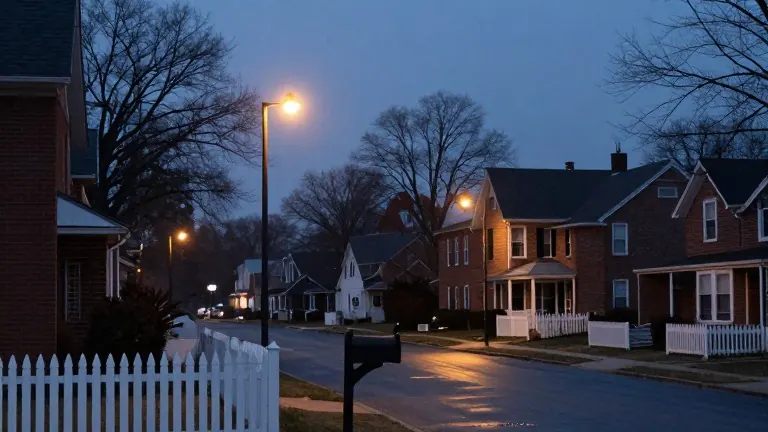
Most of Bucks County, including Doylestown, Newtown, and Perkasie, turned its clocks back one hour on Sunday, October 25, as part of the annual shift away from daylight saving time.
The local time change occurred while the U.S. Senate sat on a bill that would have made the current summer time standard permanent. The House of Representatives passed the legislation earlier in the year, but Senate Republicans have blocked it from coming to a floor vote.
President Donald Trump has pushed aggressively for the bill, using social media to pressure Senate colleagues. He posted his personal phone number and ordered Sen. Tom Cotton of Arkansas to get the job done. Trump argued that afternoon sunlight is better for productivity and safety, and he noted his own interest in having more evening hours for golf.
Cotton, a member of the Senate GOP leadership, has become the most visible opponent. He warned that the nation has tried and repealed permanent daylight saving time before, citing the discomfort of late winter sunrises. Several other Republicans, including Sen. Mike Rounds of South Dakota, joined him in opposition. Rounds stated that the change would force children to travel to school before the sun rises.
Sen. Todd Young of Indiana described the House bill as a non-starter for Senate leadership. Sen. Bernie Moreno of Ohio was more direct, saying there was no way the bill would pass soon. Majority Leader John Thune of South Dakota has not commented publicly on the current version but has voted against similar proposals in the past.
The debate echoes a prior attempt in the 1970s. Congress established permanent daylight saving time during an energy crisis, but repealed the law by October of that year as public support fell. Many Americans now recall the experiment, with recent polls showing that a majority oppose the current twice-yearly clock change. The American Medical Association and the American Academy of Sleep Medicine support moving to a single standard time.
Supporters, including Sen. Rick Scott of Florida and Sen. Ed Markey of Massachusetts, argue the change would benefit health and the economy. Scott noted that families are tired of the annual ritual. Markey called the current system a head-spinning practice that impacts happiness. Despite these arguments, the Senate is not expected to vote on the issue before it goes into recess after the November 3 midterm elections.
More News · Philadelphia news · Report a business · Got a Story?