
Sussex lab secures £82 million to build quantum computers
University of Sussex says record funding at Haywards Heath facility aims to create a regional hub for quantum research.
By Lucia Herrera ·
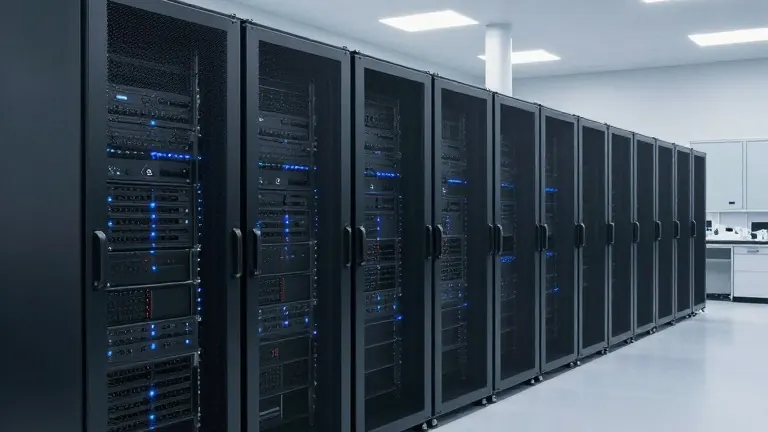
A quantum computing laboratory in Sussex raised more than £82 million from investors this week. The University of Sussex announced the funding package, valued at approximately $100 million, will accelerate the development of next-generation quantum computers at the Quantum Universal facility in Haywards Heath.
The university described the round as the largest investment ever secured by one of its research facilities. Officials also noted it stands among the biggest funding rounds for any United Kingdom university start-up. The capital is intended to help establish Sussex as a major center for quantum technology and attract new businesses and jobs to the region.
Quantum computers are designed to solve complex problems much faster than current machines. The technology could advance fields such as drug development, new materials, and cleaner energy systems. University Vice-Chancellor Prof Sasha Roseneil said the funding brings the vision of a "Quantum Silicon Valley" in Sussex closer to reality. "This record investment demonstrates the calibre of world-leading quantum computing research developed at the university and the lab's success in turning that research into a global business," she said.
Prof Winfried Hensinger, co-founder of Quantum Universal, explained the technical difference between the systems. "Normal microchips use classical computing processing techniques," Hensinger said. "What we use is quantum bits, which means the computation is significantly faster." He noted that the current fastest supercomputer in the world would take thousands of years to calculate a solution for a new drug. A quantum computer might perform that same task in a few minutes or a few hours.
Hensinger, credited with being the first person to make a single atom move backwards and forwards simultaneously, said many doubted a quantum computer was possible twenty years ago. He added that there is still no set timetable for the technology's completion at the research facility.
The Haywards Heath facility will use the new capital to expand its operations. The university expects the investment to solidify the local economy's role in the emerging quantum sector.
More Tech · Philadelphia news · Report a business · Got a Story?