Supreme Court weighs Palestine Action ban
Legal team cites Home Office data showing less than 1% of group actions met terrorism definitions.
By Mei Lin ·
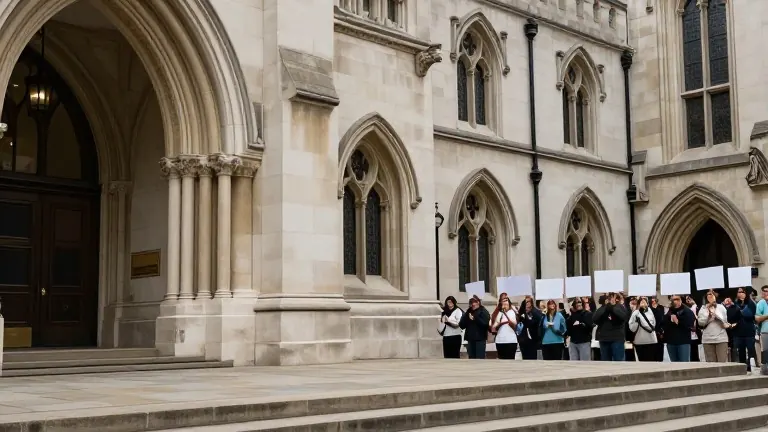
The UK Supreme Court begins a two-day hearing on Wednesday to review the government's decision to ban Palestine Action under terrorism legislation. The case tests the limits of counterterror law against rights of protest and free speech. Proceedings are expected to run through Thursday, with some segments held in secret due to national security concerns.
Police arrested hundreds of demonstrators over the weekend in London and Edinburgh. Protesters held signs reading "I oppose genocide, I support Palestine Action." Since the group was outlawed in 2025, that six-word slogan has become a rallying cry. Approximately 4,000 people have faced arrest under the Terrorism Act for displaying it. The group includes human rights lawyers, elderly activists, and Holocaust survivors.
Huda Ammori, co-founder of Palestine Action, launched the legal challenge. The government banned the group in July 2025, criminalizing membership and public support. In February 2026, the High Court ruled the ban unlawful and disproportionate. The Court of Appeal overturned that ruling in June 2026. Supreme Court justices granted Ammori permission for a final appeal in August 2026.
Ammori's lawyers argue that using counterterrorism laws for a direct action group targeting arms suppliers sets a precedent that criminalizes political dissent. Written submissions from her legal team state that the Home Office assessed less than 1% of the group's five years of direct action activities as terrorism. Raza Husain KC, representing Ammori, noted that only three of 385 actions over that period met the statutory definition of terrorism.
Husain told the court the ban caused "the total destruction of a protest group which enjoyed widespread support from across civil society." Human rights groups and UN special rapporteurs submitted written statements warning the ban creates a chilling effect. The government's counsel, James Eadie KC, argued the Court of Appeal applied "long-standing, settled, and orthodox" principles. He stated the lower court made no error of law and its factual conclusions were justified by the evidence.
The Community Security Trust and the Jewish Leadership Council submitted evidence supporting the ban. They claimed the proscription protects Britain's Jewish community. Foreign Secretary Ed Miliband acknowledged earlier this year that the ban led to the arrest of "grannies and vicars" for terror offences. He stated he did not think anyone intended to criminalize those individuals. The government continues to monitor the issue as the court deliberates.