Ukrainian troops advance 15 kilometers through 1.2-meter gas tunnel
Operation Veles marks a tactical shift as Kyiv mirrors Russian underground warfare to counter drone saturation.
By Charles Reed ·
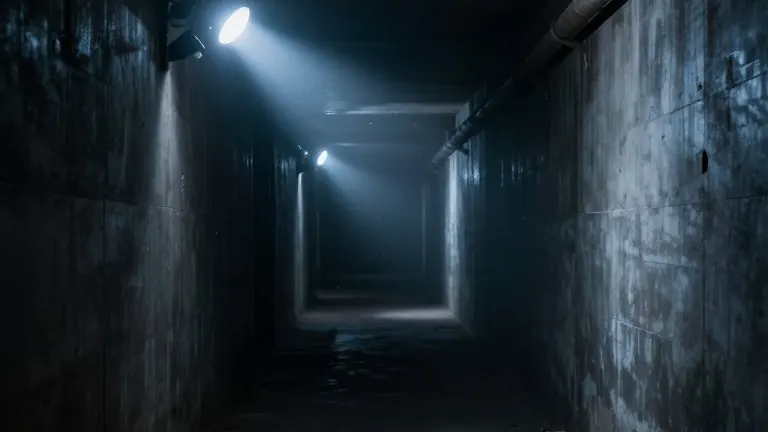
Ukrainian soldiers advanced 15 kilometers through a gas pipeline with a diameter of just 1.2 meters during a recent military campaign. This deep infiltration occurred in the Kupiansk region, where a disused underground network runs beneath the Oskil River. President Volodymyr Zelensky labeled Operation Veles a great success last week. The operation represents a new strategic dimension for Kyiv in the four-year conflict.
For nearly two weeks, the Ukrainian army showed Western media outlets the conditions inside the tunnel. Soldiers fought in a confined space to secure the tunnel entry. Zelensky stated that troops eliminated about 100 Russian soldiers and captured more than 30 others during the engagement. The fighting took place largely out of sight from standard aerial surveillance.
Huseyn Aliyev, a war specialist at the University of Glasgow, noted that this marks the first time Ukrainians have adopted tactics long used by Moscow. Russian forces have utilized these underground routes for over two years to bypass Ukrainian defensive lines. Aliyev observed that the practice is becoming widespread but originated with the Russian military.
Will Kingston-Cox of the International Team for the Study of Security cited the battle for Avdiivka in January 2024 as an early example. Russian troops reached the rear of Ukrainian positions through what appeared to be a drainage conduit. Moscow later employed similar methods to retake Kursk from Ukrainian control. The Russian army has continued to use these tunnels in the Kupiansk area.
Ryhor Nizhnikau, a senior research fellow at the Finnish Institute of International Affairs, explained that the infrastructure is a legacy of the Soviet Union. The network once transported Russian natural gas to Europe. Nizhnikau identified these pipelines in the Kharkiv, Luhansk, and Donetsk regions, as well as parts of Zaporizhzhia. He stated that both sides possess detailed maps of these routes.
The proliferation of drones has made surface maneuvers increasingly dangerous. Kingston-Cox explained that reconnaissance and attack drones can spot ground groups well before they reach their objectives. Nizhnikau argued that the tunnels offer a more predictable environment for infantry. Soldiers in the pipe know the enemy is ahead of them and are less likely to be struck by unexpected aerial fire.
Gustav Gressel, a military analyst at Austria’s National Defence Academy, noted that tunnels provide specific advantages against drone technology. Radio-controlled drones lose their signal at the tunnel entrance. Fiber-optic drone cables often snag in corners. Defenders can also place nets or fishing lines at the opening to trigger early detonation.
Aliyev said Ukrainian forces previously mocked the Russian use of pipelines, calling the method dangerous and ineffective. The Russian victories in Avdiivka and Kursk forced a tactical reconsideration. In September 2025, the independent media outlet iStories revealed that Moscow was stockpiling ammunition for a larger offensive via the Kupiansk pipeline. The underground front remains a support measure rather than a primary mode of large-scale offense due to the narrow capacity of the pipes.