Gaza War Consensus: Israel Votes on Domestic Divides
Leading candidates agree on the path for Gaza but split on judicial power and Haredi conscription.
By Mei Lin ·
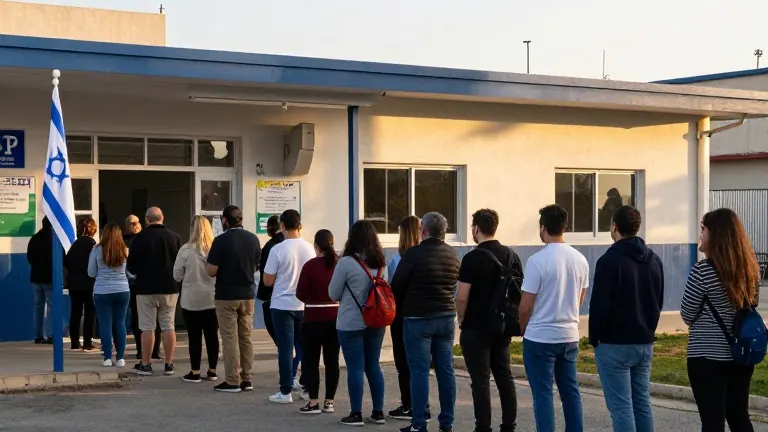
Israelis head to the polls on Tuesday in a vote that will determine the future of Prime Minister Benjamin Netanyahu’s government. While the election is widely described as the most consequential in the nation's history, the leading contenders have largely aligned on foreign policy. No major candidate has challenged the war in Gaza that began after the Hamas-led attack of October 7, 2023, or the subsequent conflict with Iran. Most have also failed to present a clear plan for a two-state solution.
The primary division among voters is domestic. Netanyahu’s hard-right bloc promises to govern free of the judicial oversight he has criticized for years. His opposition, a loose coalition of parties, promises a similar policy agenda but intends to operate within existing legal frameworks. This bloc seeks to avoid the more extreme elements of the current administration while maintaining core security positions.
The status of the Palestinian state remains a point of contention, though few leaders offer a unified vision. Israel committed to a two-state framework in the Oslo Accords of the 1990s, yet current leaders are split on how to proceed. Netanyahu has stated there will be no Palestinian state, while Gadi Eisenkot of the Yashar party called the two-state principle a mistake. Finance Minister Bezalel Smotrich urged the next government to cancel the Oslo Accords and pursue sovereignty over occupied territory. Yair Golan of the Democrats party suggested civil separation and security responsibility as alternatives to full statehood.
The conscription of the ultra-Orthodox, or Haredi, population is another major issue. As the economic and human costs of the wars have risen, the prominence of this debate has grown. Netanyahu relies on the Shas and United Torah Judaism parties for support in the Knesset. These parties have demanded legislation to overturn the Supreme Court ruling of June 25, 2024, which shields ultra-Orthodox youth from military service. After approximately 40 Haredim were arrested this month for avoiding conscription, Netanyahu described the arrests as a deliberate attempt to harm the drafting process without coercion.
Shas leader Aryeh Deri said his party would not join any government unless the status of yeshiva students is regulated. Eisenkot framed the election as a choice between Netanyahu’s draft-dodging government and a government of conscription led by himself. Avigdor Liberman, leader of Yisrael Beiteinu, called Netanyahu a hostage to the draft evaders. These statements underscore the deepening rift over military obligations within the coalition.
The judicial overhaul is a central flashpoint in the campaign. Days after taking office in 2022, the government unveiled a plan to curb the power of the courts. This move sparked months of mass protests in 2023 before the war in Gaza interrupted them. The coalition has since passed measures changing how judges are appointed. In July, a law stripped Attorney General Gali Baharav-Miara of many powers, allowing the government to reject her legal advice and hire its own lawyers. These measures are set to take effect after the election, and most opposition parties have vowed to reverse them.
The government has also boycotted Chief Justice Isaac Amit. Critics argue this is an assault on democracy by a prime minister facing a long-running corruption trial. Justice Minister Yariv Levin, however, calls the election a historic chance to finish the judicial reforms. Netanyahu argues that Israel needs the power of the people rather than the judges, and that the judiciary must not crush the Knesset or the executive. Naftali Bennett, co-leader of the Together alliance and a former prime minister, pledged to cancel all legal revolution laws as soon as the Knesset convenes.
Accountability for the events of October 7 has dominated the campaign, even as the killing of more than 74,000 people in Gaza has been absent from the platforms of the two main alliances. Inquiries into security failures led Chief of Staff Herzi Halevi to announce his resignation in January 2025. A bitter dispute with the prime minister ended with Shin Bet head Ronen Bar leaving in June of last year. No comparable inquiry has examined Netanyahu’s own role, despite reports that the UAE and Egypt warned him before the attack.
Eisenkot said Netanyahu was warned and did not act, and he promised a State Commission of Inquiry. Netanyahu told the Knesset his government wants an inquiry with as broad public support as possible. The proposed government-led inquiry never reached its final reading and has been deferred to the next session of the legislature.
Source: Al Jazeera