
Israelis cast ballots in tight race to replace Netanyahu
Over 7 million voters decided Tuesday whether to continue the war with the current government or shift power to a rival bloc led by Gadi Eisenkot.
By Mei Lin ·
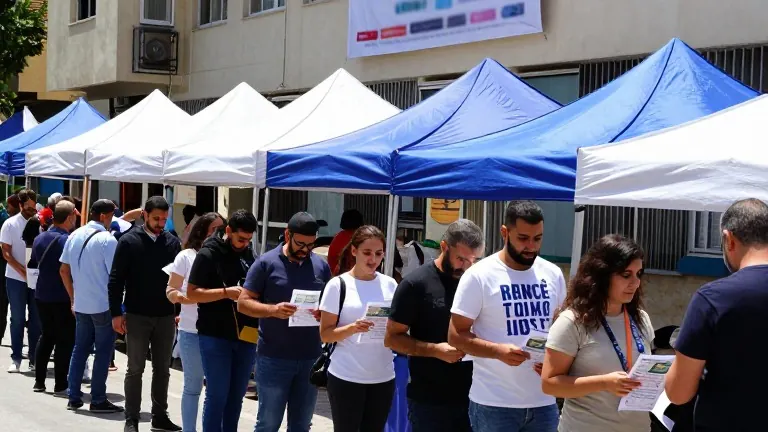
Israeli voters stepped up to the polls Tuesday morning to decide the fate of Prime Minister Benjamin Netanyahu after a three-year conflict. More than 7 million citizens were eligible to cast ballots in what polling predicts will be a close contest. The race pits Netanyahu against Gadi Eisenkot, the former military chief who leads the main opposition coalition.
Because no single party can secure a majority in the fragmented parliament, the outcome will likely depend on coalition building. Mansour Abbas, the head of the Islamist Ra’am party, said Arab voters could determine the result if they turn out in high numbers. Abbas told reporters at his polling station that he hoped participation in Arab communities would exceed 70 percent. He stated that the vote would change the government if his supporters delivered their numbers.
Far-right National Security Minister Itamar Ben-Gvir warned of the stakes involved. After voting, he said that if Netanyahu and his allies did not win, it would be Mansour Abbas’ government. Tensions with Iran also loomed over the day. Netanyahu released a video earlier in the week standing next to a missile-defense battery. In the clip, he told Tehran it would face a devastating blow if it attacked Israel.
The election marks the first national vote since the October 7, 2023, attack that started the war in Gaza. In Tel Aviv, families of those killed on that day and former hostages observed a moment of silence before polls opened. Yona Adam, whose daughter Mapal was killed, asked the crowd to remember all those whose voices are no more. Meanwhile, Eisenkot visited communities targeted in the initial assault. He noted that a responsible government would start the morning in the Gaza envelope. Netanyahu had not been seen in public three hours after polls opened.
About 330,000 young Israelis are voting for the first time, many while facing compulsory military service. The vote addresses deep divisions over the role of religion and the state. Critics say Netanyahu has undermined the judiciary and allowed ultra-Orthodox Jews to avoid enlistment. His supporters view him as a steady leader who has protected the country’s identity. Eisenkot, whose son and two nephews were killed in Gaza, is seen by his backers as a leader with strong security credentials.
Nisso Shitrit, a voter in Jaffa, described the election as being about who serves and who evades service. He said it determines who takes an active part in building the country. Tens of thousands of overseas Israelis reportedly flew home to vote. The result will set the direction for a nation that has faced increased criticism from traditional allies in recent months.
Negotiations may last for weeks if neither side wins a clear majority. The Israeli Arab-led parties could become key partners for either bloc. The final outcome will rest on whether political leaders can forge a working government from the results.
Source: NBC10 Philadelphia · original report published
More News · Philadelphia news · Report a business · Got a Story?