Gaza residents brace for Israeli election result
Displaced families in Deir el-Balah and Gaza City say they fear a second Netanyahu term will extend the siege and prevent a return home.
By Lucia Herrera ·
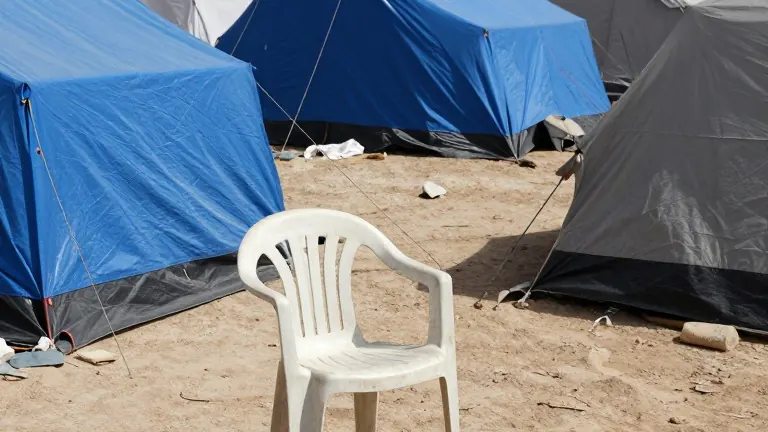
Israeli citizens cast ballots on Tuesday, a moment that has brought a mixture of anxiety and quiet hope to displaced Palestinians across Gaza. Although a ceasefire has held since October 2025, residents report facing near-daily air strikes and a strict siege that limits the supply of basic goods.
The election campaign has been defined by the war that began with Hamas-led attacks on October 7, 2023. Prime Minister Benjamin Netanyahu has faced scrutiny over his pre-war security decisions, while members of his far-right coalition have pushed for a harsher strategy. This includes proposals to expel Gaza's population from the territory.
Mohammed Eliyan, 36, lives in Deir el-Balah with his five children after being displaced from the Jabalia refugee camp. He favors Gadi Eisenkot, a former military commander and Netanyahu’s primary rival. Eliyan fears that a continued Likud-led government will bring more displacement, yet he expects little immediate relief. "They are still our enemy, and I don't expect things to improve dramatically," he said.
Islam Salem, 41, views the vote as a factor in his three daughters' future. He believes Israel controls roughly 65 percent of Gaza inside the "Yellow Line," a boundary that complicates reconstruction efforts. With more than 80 percent of buildings damaged and about two-thirds completely destroyed, Salem doubts a new government will alter the fundamental approach. "We live day by day," he said. "Everything we feared has already happened."
Hanan Abu al-Maaza, 57, has been displaced more than twelve times during the conflict. She fears that a Netanyahu victory will worsen treatment and delay her return to Beit Lahiya. Owaida Manar, 23, who is displaced in the Tal al-Hawa neighborhood of Gaza City, worries that Netanyahu might launch a wider regional war to ease domestic pressure. Mousa Ali, 33, also displaced from Beit Lahiya, hopes Arab parties will gain enough seats to influence the next government.
Residents share a common request for the incoming leadership: end the war and allow people to return to their homes. "We hope this policy will end and that a new prime minister will stop this ongoing bloodshed," Ali said.
Source: Al Jazeera