
Israeli voters choose between Netanyahu and Eisenkot
Polling stations opened Tuesday across Israel, with final results expected Wednesday afternoon as coalition talks begin.
By Mei Lin ·
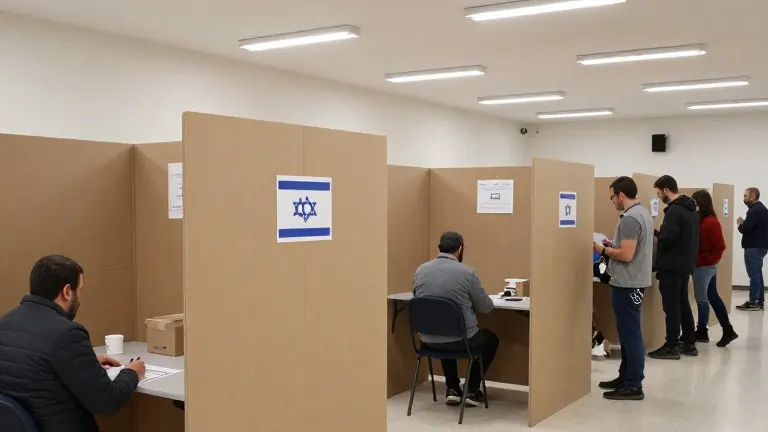
Polling stations opened across Israel on Tuesday, Oct. 27, placing Prime Minister Benjamin Netanyahu's tenure at risk in a close contest against centrist challenger Gadi Eisenkot. Voting ends at 10 p.m. local time, 4 p.m. ET. Exit polls follow, and final results are expected Wednesday afternoon.
This is the first Israeli ballot since the Hamas attack on southern Israel on Oct. 7, 2023, in which about 1,200 Israelis were killed, and the war in Gaza that followed. The Gaza Health Ministry, run by Hamas, puts the death toll there at 74,555. Voters are also weighing the 12-day war against Iran in 2025 and a joint U.S.-Israeli campaign against Iran that began in February 2026.
Netanyahu first won the premiership in 1996 and held it for 12 straight years from 2009 to 2021. He returned to office in 2022 while facing charges of bribery, fraud and breach of trust. He leads the right-wing Likud party.
Netanyahu has campaigned on his security record. "Israel's enemies only want us to lose," he wrote on X this week, calling the opposition bloc "dangerous" and "left-wing." He also posted an image to X this week that appeared to show a nuclear strike on Tel Aviv, arguing he alone can confront an Iranian nuclear arsenal. Tehran denies pursuing nuclear weapons.
Eisenkot, who heads the centrist Yashar party, has argued that Netanyahu failed to stop the Oct. 7 attack and has not achieved Israeli war aims, including dismantling Hamas in Gaza and defeating Iran. At his final campaign rally Monday, Eisenkot said Netanyahu would "stop at nothing, no lie, no extreme measure, to stay in power." He added, "Anyone who thinks our Israel can survive another four years like these is living under a dangerous misconception."
Israeli forces are operating across several fronts: Gaza, Lebanon, Syria, Iran and the occupied West Bank. Netanyahu ordered the 2023 campaign against Hezbollah in Lebanon that killed the group's leader Hassan Nasrallah, directed the IDF to take positions in southern Syria after Bashar al-Assad fell to rebel groups led by Ahmed al-Sharaa, and in June 2025 ordered strikes on Iranian military and nuclear facilities. U.S. forces joined that campaign, which became known as the 12-day war. A joint U.S.-Israeli campaign launched in February 2026 killed Supreme Leader Ayatollah Ali Khamenei and other senior Iranian officials.
Eisenkot has said he would keep military pressure on Iran, Hezbollah, Iraqi militias and the Houthis in Yemen, and would not withdraw the IDF from Gaza while calling for Hamas to be eliminated. He has been more critical of Israeli settler groups in the West Bank, saying he would use the military to rein in their violence against Palestinian communities.
Ahmad Tibi, a member of parliament who leads the Ta'al party, wrote on X Monday that he was "determined to do everything to bring down this government." Arab-Israeli leaders have urged record turnout. About 2.1 million Arab-Israelis live in Israel, around one fifth of the population, a group Netanyahu and his supporters have cast as a national security threat. The Netanyahu campaign has used the slogan, "The Right or Palestine."
President Isaac Herzog will consult party leaders after the count and offer the mandate to form a government to the figure he judges most likely to assemble a parliamentary majority, usually the leader of the largest party. Netanyahu remains caretaker prime minister during negotiations, which can run for several weeks. President Donald Trump endorsed Netanyahu this week, writing on social media, "Vote for Bibi Netanyahu for Prime Minister, we have to finish the job that we started!"
Source: 6abc Action News · original report published
More World · Philadelphia news · Report a business · Got a Story?