DOJ Moves to Segregate Alaska Senate Ballots Amid Criminal Probe
Federal prosecutors seek a court order to isolate votes for a challenger sharing the incumbent's name, days before Tuesday's election.
By Lucia Herrera ·
The U.S. Department of Justice requested a federal court order on Friday to isolate specific ballots in Alaska’s upcoming Senate race. The move coincides with the confirmation of an active criminal investigation into an alleged scheme to confuse voters. The general election is scheduled for Tuesday.
The probe centers on a retired teacher named Dan J. Sullivan who appears on the ballot. He shares a similar name with the incumbent, two-term Republican Senator Dan Sullivan. Federal officials stated that the investigation has been underway for several months. Recent reporting by The New York Times suggested that Democratic candidate Mary Peltola’s campaign may have been involved in recruiting the challenger. U.S. Attorney Michael Heyman said this development led to a surge of law enforcement resources in the state.
In a separate legal filing, the Justice Department asked a judge to require state election officials to preserve and segregate all ballots that rank Dan J. Sullivan. Assistant U.S. Attorney E. Bryan Wilson argued that this step is necessary to investigate whether voters chose the challenger due to confusion with the senator. The filing requests a judicial decision by Monday. The Department of Justice also submitted a list of proposed questions for the Peltola campaign and the Democratic Senatorial Campaign Committee to answer in a related civil case.
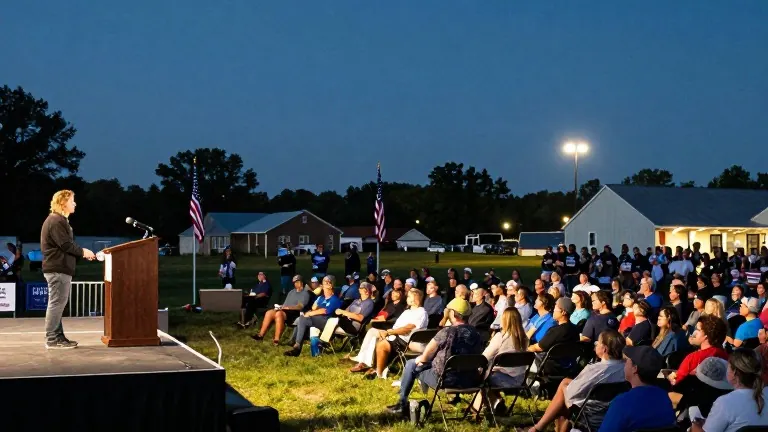
Peltola, the former U.S. representative, denied knowledge of the effort to place Dan J. Sullivan on the ballot. Speaking at a campaign event in Juneau on Thursday, Peltola stated she knew only of herself and the incumbent as candidates. She said she was not interested in tricking voters. The Democratic Senatorial Campaign Committee has also denied involvement in a campaign trick, and Dan J. Sullivan has long denied running at the behest of Democrats.
State election officials argued that they took steps to distinguish the two candidates on the ballot. The incumbent is listed as Dan S. Sullivan, Republican, while the challenger is listed as Daniel J. Sullivan Jr., with no party affiliation. This format matches the August primary ballot. State attorneys noted that the state’s ranked voting system allows voters to rank both candidates, which they argue addresses potential confusion concerns.
The timing of the federal announcements has drawn attention because the election is less than a week away. Heyman told reporters in Anchorage that he would not specify the potential crimes under investigation or the targets of the probe. He asked members of the public to provide tips to investigators. It is unusual for Justice Department officials to confirm a criminal investigation publicly so close to an election day.
Federal prosecutors issued dozens of grand jury subpoenas and records preservation requests earlier in the week, according to a person familiar with the matter. Republican Governor Mike Dunleavy said he ordered his own investigation into potential violations following the New York Times reporting. The Justice Department filed its lawsuit last week, a move that President Donald Trump said he instructed the department to take.
The request to segregate ballots in Alaska follows a similar legal effort in California. The Ninth U.S. Circuit Court of Appeals recently rejected the Justice Department’s request to set aside disputed ballots sent to roughly 20,000 people the administration believes may not be U.S. citizens. In the Alaska case, department attorneys stated there is a substantial risk that the challenger’s candidacy will mislead voters and impact the integrity of the electoral process.
The Alaska Democratic Party filed a lawsuit on Friday against state election officials. The party alleged that absentee in-person voting sites did not open as advertised in some rural communities. The director of the Division of Elections sent a letter stating that the agency signs agreements with local or tribal offices to operate these sites and that most of the 18 highlighted locations had opened. A message seeking comment from the state Department of Law was not immediately returned.
More Politics · Philadelphia news · Report a business · Got a Story?