Congo Ebola Death Toll Exceeds 5,000 as Spread Reaches New Nations
Government data reveals a 50% lethality rate in the ongoing outbreak, which has now been detected in Kenya and Nigeria.
By Charles Reed ·
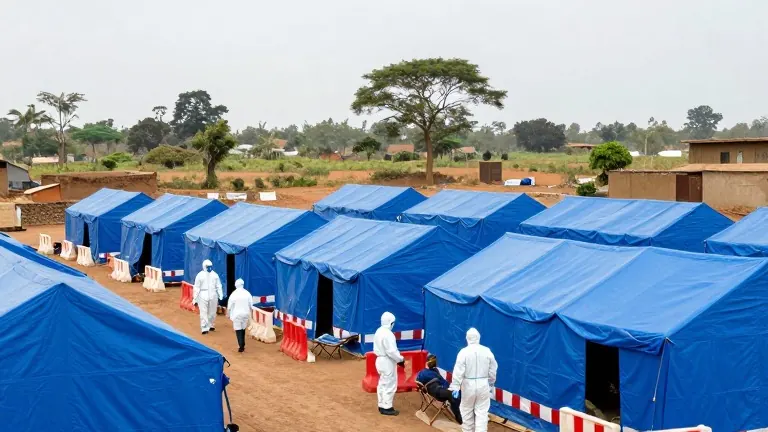
The Ebola outbreak in the Democratic Republic of Congo has killed 5,026 people, according to data released by the Ministry of Health on Saturday. The figures indicate that the virus has infected a total of 10,351 individuals, resulting in a lethality rate of nearly 50 percent. The disease, caused by the Bundibugyo strain of the virus, has been declared the second deadliest Ebola outbreak in history. It trails only the West African epidemic that lasted from 2014 to 2016 and claimed 11,000 lives.
The current outbreak was declared in mid-May, a timing that caught health authorities off guard. Since that initial declaration, the disease has spread to 67 of the country’s 178 health zones. These zones are located across eight of Congo’s 26 provinces. Fifty of the affected zones currently report active cases. The virus remains concentrated in the eastern region, specifically in Ituri and North Kivu provinces. Together, these two areas account for 9,782 confirmed cases and 4,792 deaths.
Health experts express concern over the government’s ability to contain the virus. Patrick Otim, a program area manager with the World Health Organization, described the 5,000th death as a tragic milestone. He noted that the statistic represents families and communities devastated by the disease. Otim emphasized that the numbers reflect the severity of the outbreak and the strain on the response teams.
A major obstacle to containment is the difficulty in tracing contacts and conducting tests. Data from the Africa Centers for Disease Control and Prevention shows that approximately 80 percent of new cases arise outside of monitored contact chains. This means most infections are occurring in transmission pathways unknown to health officials. Additionally, one-third of recorded deaths involve victims who died before they could be tested or treated at a facility.
The outbreak is being complicated by ongoing conflict in the eastern region. Government forces and armed groups, including the Rwanda-backed M23 rebel group, are fighting in the area. An Islamist insurgency led by the Allied Democratic Forces also operates in border areas near Uganda. These conflicts limit the ability of healthcare workers to reach patients. Community distrust has also led to attacks on health facilities and staff.
Last week, a nurse was killed while responding to an Ebola alert. In September, a politician from the ruling party was killed after advocating for health measures on the radio. Health workers have also staged multiple strikes over delayed payments from the government. On Friday, workers at an Ebola treatment center in Tchomia, Ituri, went on strike. They are demanding four months of unpaid wages. The center currently cares for five confirmed patients and ten suspected cases.
Moise Mugenyi, a striking worker at the Tchomia center, stated that feeding his family has become a real problem. Justin Mukonkole, the acting head of response operations in Ituri, asked workers to be patient while the government addresses their demands. Similar disruptions have occurred in Beni, North Kivu, where services have halted due to a lack of fuel and financial resources. Alain Siwako, a public official in Beni, said cases are spiraling because of these shortages.
The outbreak has now expanded beyond Congo’s borders. In October, both Kenya and Nigeria confirmed cases of Ebola. Kenya has reported eight cases and two deaths. Nigeria’s sole confirmed case was evacuated to Switzerland for treatment. Earlier cases were also recorded in Uganda. This makes the current event the first recorded outbreak in three African regions and the most geographically widespread on the continent.
Rose Tchwenko, country director for Prosper Global in the DRC, stated that the outbreak is stretching everyone involved, including the communities themselves. Health workers continue to treat patients based on symptoms, as there is no known vaccine or specific treatment for the Bundibugyo virus. To date, 2,788 people have recovered from the infection.
More News · Philadelphia news · Report a business · Got a Story?