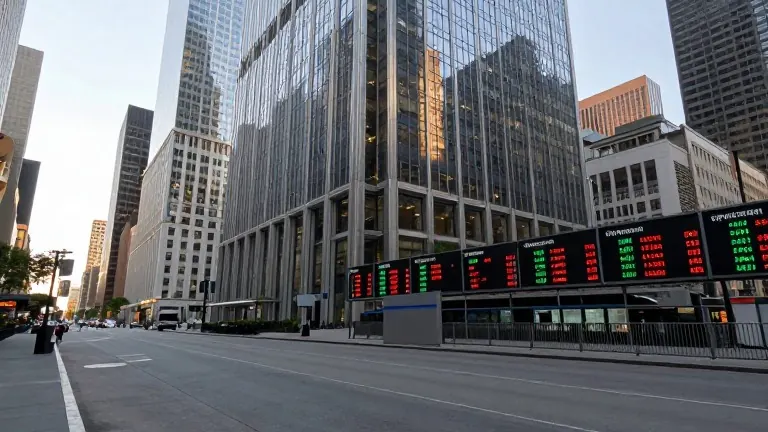
Breaking: AI Bubble Fears Drive Historic Market Crash
Investors sell off tech stocks as election results raise questions about the return on massive AI infrastructure spending.
By Mei Lin ·
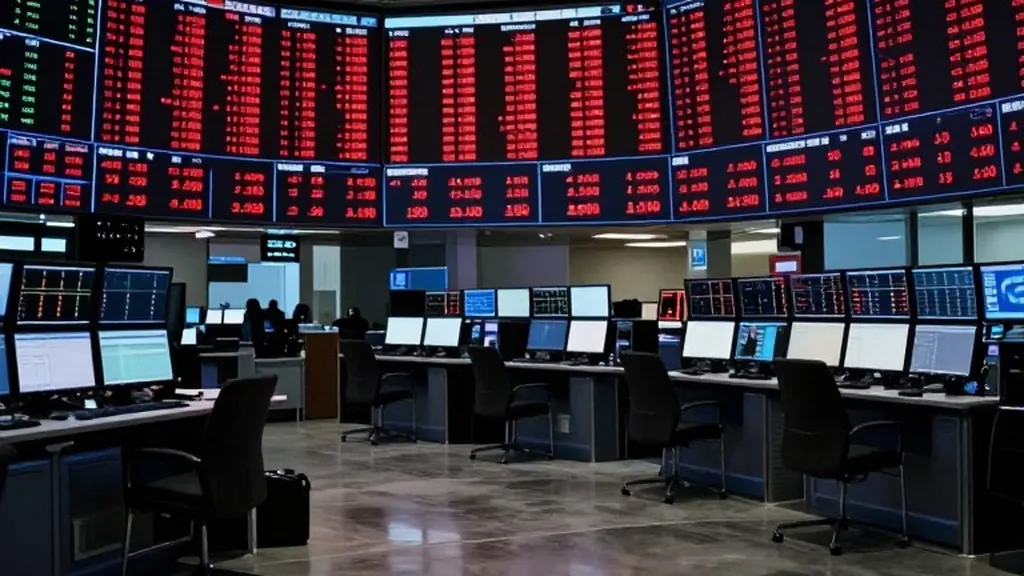
A severe sell-off in artificial intelligence stocks dominated the trading session on Thursday, November 5, as Wall Street grappled with a sudden reckoning over the industry's valuation. The S&P 500 fell 4.3 percent, marking its worst day since April 2025, while the Nasdaq Composite dropped 5.5 percent. This decline pushed the Nasdaq into correction territory, defined as a fall of at least 10 percent from its recent high. The Dow Jones Industrial Average also suffered, falling more than 1,800 points or 3.4 percent to close at 51,868. For local readers, this represents a significant shift in the financial landscape that has supported retirement accounts and small investor portfolios for the past few years.
The primary driver of this volatility was a growing consensus that the massive sums poured into AI infrastructure may not deliver the returns investors have been banking on. Susannah Streeter, chief investment strategist at Wealth Club, noted that fresh panic over the AI trade has hit Wall Street hard. She explained that fears regarding the vast sums invested in AI infrastructure are now colliding with the prospect of a sharp slowdown in data center construction. This sentiment reflects a broader anxiety that the industry may be experiencing a bubble, a worry that has existed since before the recent midterm elections but has now been amplified by political outcomes.
The tech industry itself expressed surprise at the intensity of the public backlash against data center development. Greg Brockman, president and co-founder of OpenAI, spoke at the WSJ Tech conference in Napa, California, on Wednesday evening. He stated that everyone had been surprised by the reaction to data centers and that more work was needed to bring communities on board. Brockman emphasized a shift in strategy, noting that from San Francisco, companies trying to build infrastructure in places like Texas and Georgia can no longer just tweet that the project is good. Instead, he said, you need to be in those communities. This admission highlighted a disconnect between industry leaders and the local populations affected by the rapid expansion of AI hardware.
Dina Powell McCormick, president of Meta, shared a similar perspective at the same conference. She told the audience that the industry needed to put more effort into making the case for AI. McCormick stated, I think we need to double and triple down on telling the story. These comments underscore the realization that the previous growth model, which relied on rapid expansion and technological optimism, may require a new approach to maintain public and political support. The surprise expressed by these leaders suggests that the intensity of the market reaction was not fully anticipated by the top executives driving the AI buildout.
The political context of the crash is rooted in Tuesday's midterm elections, where Democrats swept the House and Senate. Candidates across the country campaigned on slowing the spread of data centers and AI, and voters rejected data center development in a series of local ballots. In Texas, Democrat Gina Hinojosa won the race for governor after campaigning on an immediate moratorium on new data center construction. Democratic victories in states with large concentrations of planned data centers, including Ohio and Texas, heightened concerns that the facilities at the heart of the AI buildout will face new hurdles. Investors are now weighing whether tighter state-level restrictions could slow construction, pressuring companies tied to the artificial intelligence trade.
The selling was widespread and intense, with the Philadelphia Semiconductor Index falling more than 12 percent. This index tracks 30 of the largest chip companies and has fallen more than 30 percent since the beginning of October. Nvidia, a key player in the AI sector, fell 9.2 percent, losing more than $400 billion in market value. The Magnificent Seven technology companies, which include Apple, Nvidia, and Tesla, shed about $1 trillion in value in the single trading day. The Cboe Volatility Index, often called Wall Street's fear gauge, jumped as much as 5.7 points to above 28, its highest reading since March 31, 2026. This spike indicates a significant increase in market anxiety and volatility.
For savers and small investors, a day like this can be disorienting. The rapid decline in stock prices means that the value of retirement accounts and individual portfolios can drop significantly within a single session. While the market has seen corrections before, the speed and scale of this decline, coupled with the specific narrative of an AI bubble bursting, create a sense of urgency. Investors are looking for stability, but the nature of the current sell-off suggests that the market is moving from the promise of AI to the price of AI. Ted Parkhill, founder and chief executive of Incline Investment Management, noted that there is no question that AI is going to be transformative for the world in the long run. However, he added that this does not mean every AI-related stock is currently priced appropriately, and there is going to be a lot of turmoil.
Analysts are divided on the immediate future of the market. Gene Goldman, chief investment officer at Cetera Financial Group, said the sell-off had become exaggerated as selling accelerated through the day. He predicted a recovery, stating that when you have a correction in a bull market, they are typically short lived. Goldman noted that it is ugly right now, but he believes a bounce back is imminent. Conversely, Neil Wilson, investor strategist at Saxo UK, described the situation as a complete capitulation-level event. He warned that the fear is a total momentum unwind as Democrats pace the frontier and potentially halt data center buildout. Wilson observed that while the drop looks totally overdone, the nature of sell everything in this market means we need to look for some stability first.
More Business · Customer Complaints · Report a business · Got a Story?