Student List wins Serbian parliament
Voter turnout hit a three-decade high as the opposition bloc secured 135 seats against Vucic's 105.
By Mei Lin ·
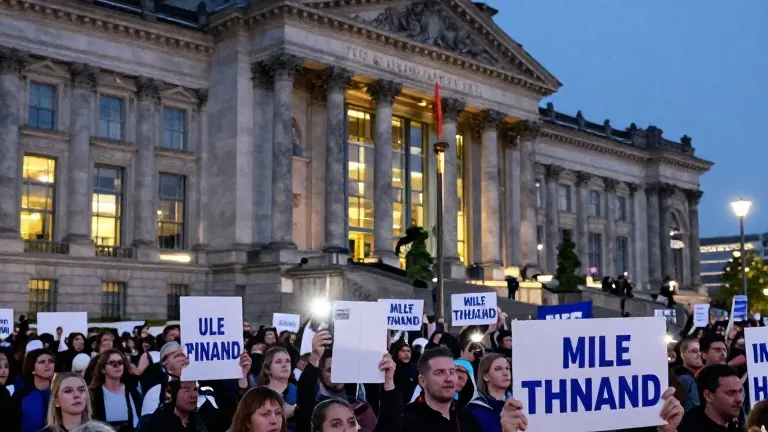
Voter turnout in Serbia’s Sunday parliamentary election reached its highest level in more than 30 years, a surge that propelled a student-led movement to power and ended the long rule of Aleksandar Vucic. The Student List was projected to capture between 135 and 140 seats in the 250-member parliament, securing a decisive majority. Vucic’s Serbian Progressive Party, or SNS, was expected to take 105 seats based on exit polls.
The shift in political control follows a campaign marked by nearly two years of sustained protests. The movement originated after a train station canopy collapsed in Novi Sad on November 1, 2024, killing 16 people. What began as a grief-driven demonstration among university professors, doctors, and workers evolved into a formal political platform. Ilija Srdanovic, a professor at the Faculty of Medicine in Novi Sad, led the Student List during the final months of the campaign. The group pledged to depoliticize public institutions and restore citizens' rights.
Speaking to supporters after the vote, Vucic conceded the result. “It is clear that we have lost these elections,” he said. He had previously labeled the demonstrators “blockaders” and accused them of seeking to destabilize the country. Vucic, who was born in Belgrade in 1970, entered politics in 1993 with the ultranationalist Serbian Radical Party. In July 1995, days after the Srebrenica genocide, he told parliament that for every Serb killed, 100 Muslims would be killed. His political partner, Vojislav Seselj, was sentenced to 10 years in prison in 2018 for persecution and deportation of non-Serbs during the Balkan wars. Seselj’s son, Aleksandar, ran on Vucic’s list in the recent vote.
Vucic co-founded the SNS in 2008 with Tomislav Nikolic after a split in the Radical Party. Journalist Safeta Bisevac noted that Vucic was initially less popular than Nikolic and served as the “essentially the organiser” of the new party. The SNS took power in 2012 with promises to combat corruption and organized crime. Bisevac described the results as modest, noting that authorities expanded their control over institutions and media. “He made many promises and fulfilled few of them,” Bisevac said, “but in the meantime, he established almost complete control over the state apparatus.”
Vucic served as first deputy prime minister from 2012 to 2014, then as prime minister, before becoming president in 2017. He won re-election in 2022, with his term scheduled to last until 2027. Pressure from the street protests forced him to resign in September 2026, leading to the snap election. Although he stepped down from the presidency, he retained dominant influence over state policy until the vote.
Economic indicators improved during Vucic’s tenure, though the gains did not evenly translate to higher living standards. Official data cited by Reuters shows unemployment dropping from 26 percent to between 8 and 9 percent. Nominal GDP nearly tripled to approximately 90 billion euros. Annual foreign direct investment rose from roughly 800 million euros in 2012 to a record 5.2 billion euros in 2024. A network of modern motorways was also constructed. However, the debate over his record remains focused on rising living costs and public debt.
Political scientist Dusko Radosavljevic attributed the victory to the movement’s ability to channel public frustration. He said the students “simply gave a voice to the justified anger of citizens.” Radosavljevic characterized the past decade as a period of “systematic pressure and the destruction of social institutions.” He noted that intelligence services frequently monitored political opponents while critical thinking was marginalized in public media.
The new Student List government now faces the task of managing an economy that has grown substantially under the previous administration. The incoming leadership must address the structural issues highlighted by the high turnout, including the cost of living and the balance of power within state institutions. The parliament will convene to form the new cabinet in the coming weeks.
Source: Al Jazeera
More Politics · World news · Report a business · Got a Story?