Reader proposes one console, multiple screens for local multiplayer
A detailed plan suggests using existing hardware to give every player a private, full-screen view in the same room.
By Charles Reed ·
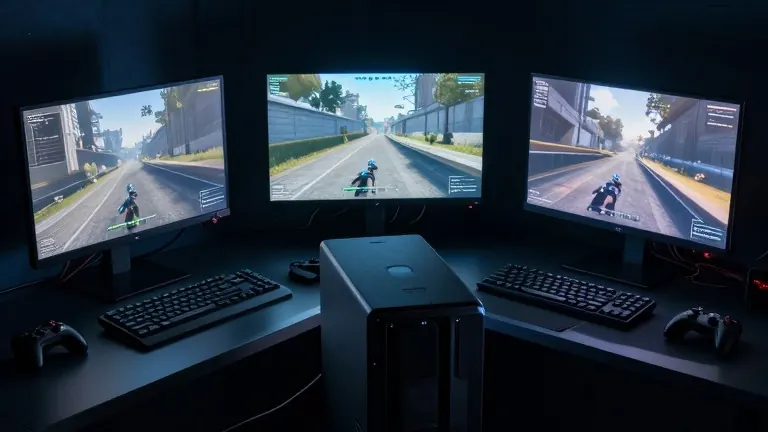
A Metro reader named Sheel has outlined a specific hardware setup to revive local multiplayer gaming. The proposal centers on connecting a single powerful console or PC to multiple independent displays. This configuration would give every player in the room their own full-screen experience while keeping them physically together.
Sheel argues that local multiplayer has become less common in recent years. The reader believes a modern evolution of this format could make it more appealing. The core idea relies on technology that largely exists today. The missing piece is widespread support from game developers and platform manufacturers.
In the proposed setup, one central machine drives several monitors or televisions. Each player receives a complete, unobstructed field of view on their own screen. They would use their own controller, keyboard, or mouse. The game interface, including HUD elements, inventory, maps, and menus, would remain independent for each participant. No player could see another person's viewpoint unless they physically looked over at that person's screen.
This arrangement offers a distinct advantage over traditional split-screen gaming. Screen space changes from a shared area to a full screen per player. The risk of screen cheating goes from extremely easy to physically avoidable. Field of view improves from often compromised to independent. Competitive fairness benefits from much better privacy. Local co-op play could become potentially excellent. The hardware requirement shifts from one display to multiple displays. Performance demand increases because the system must render multiple viewpoints and potentially higher resolutions.
Sheel notes that dedicated displays do not automatically eliminate screen cheating if the monitors are visible to one another. Placing players in different parts of a room, using dividers, or arranging the screens back-to-back would solve that issue. The biggest technical obstacle is not the displays themselves. Modern graphics hardware can already drive multiple monitors.
The real challenge lies in game software. Games must support multiple independent players, cameras, input streams, and display outputs within one running instance. In a competitive shooter, the CPU would run one shared simulation of the arena. The GPU would render multiple different camera perspectives. Each perspective would route to a separate display. Each controller would operate only its assigned character. The game would maintain separate private information for each player. This process requires more computing power than rendering a single perspective, though game simulation, physics, and world data could be shared.
Precedents for this concept already exist. The Nintendo DS and Wii U explored asymmetric displays in different forms. PC software such as Nucleus Co-op has demonstrated ways of running multiple game instances for local multiplayer. However, that is different from native multi-output support built into the game engine.
Sheel identifies three compelling categories for this setup. The first involves multiple people in one room playing a tactical shooter, racing game, or arena combat game with independent displays and no network connection. The second category includes immersive cooperative adventures where players explore different parts of an open world independently, communicate verbally, and reunite for missions. The third category is local racing and simulation, where multiple drivers compete on separate screens, possibly with individual steering wheels, all powered by one high-performance computer.
This approach could bring back the social experience of being in the same physical room. It would retain the competitive integrity and visual freedom of online multiplayer. Players would effectively get LAN party style gaming without needing a separate gaming PC or console for every participant. There is also an economic possibility for a future console specifically designed for multiplayer multi-display gaming. Developers could target a standardized hardware configuration in that scenario.
The reader states that the features do not necessarily represent the views of GameCentral or Metro. Readers can submit their own 500 to 600-word features at any time. If used, the submission will be published in the next appropriate weekend slot. Interested writers can contact the publication via email or use the submit page.
More Tech · Philadelphia news · Report a business · Got a Story?