Michigan Voting: Sheriff and Federal Agencies Target 2026 Midterms
Sheriff Dar Leaf is questioning state officials on voter rolls, while the Justice Department seeks access to data in 30 states.
By Lucia Herrera ·
Sheriff Dar Leaf is leading a push to challenge the integrity of the upcoming U.S. midterm elections in Michigan. He is currently questioning state election officials as part of an investigation into allegations that voter rolls are inflated with non-citizens. This move comes despite studies indicating that non-citizen voting is extremely rare. Leaf, who has served as sheriff of Barry County, asserts that he has a duty to investigate these claims and will not back down.
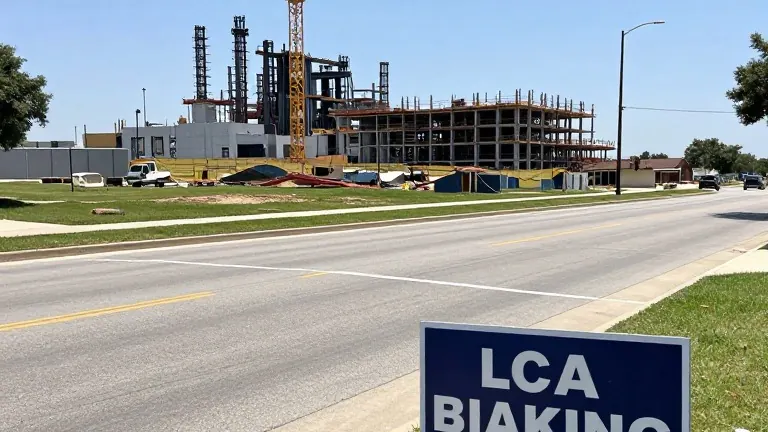
The tension between local law enforcement and election officials has deepened in the lead-up to the November vote. Leaf is a prominent member of the Constitutional Sheriffs and Peace Officers Association. This group holds that sheriffs possess ultimate authority within their counties. In 2021 and 2022, Leaf and his deputies attempted to seize voting machines, but a judge and a prosecutor ruled that his claims lacked merit. More recently, California sheriff Chad Bianco, a fellow association member, seized 650,000 ballots from the 2024 election. A court later ruled that seizure unlawful and ordered the ballots returned. Leaf stated that if he were to seize ballots now, he would likely take them first and then obtain a court order.
Federal agencies are increasingly involved in these disputes. Election deniers now hold senior posts at the Department of Justice. The department is currently fighting 30 states for access to sensitive voter information. Officials are searching for evidence of non-citizen voting. Earlier this year, the FBI seized 2020 ballots in Fulton County, Georgia, despite the state counting results three times to confirm the outcome. The FBI and Immigration and Customs Enforcement have also been tasked with investigating voter fraud, a phenomenon most studies describe as rare.
President Donald Trump has supported these efforts by ordering the U.S. Postal Service to restrict mail-in voting. He has also pushed Congress to pass a voter ID law that would make it harder for millions of Americans to cast ballots. The Constitution grants states, not the president, authority over elections. Courts have upheld this principle in previous disputes. With legislative efforts stalled and polls suggesting Republican congressional majorities are at risk, some movement leaders are urging a national emergency declaration. They argue that voting machines are vulnerable to foreign hacking. When asked about this possibility, Trump said, "I don't rule anything out or in."
Detroit pastor Lorenzo Sewell, who has ties to the administration, suggested that a national emergency could allow the president to halt machine counting and mail-in balloting. He noted that this move would require public pressure, describing the desired scenario as "another January 6th, minus the violence." Legal experts widely view this idea as unconstitutional. David Becker, a former Justice Department elections lawyer who now leads the Center for Election Innovation and Research, stated that the Constitution is built on the idea that the president has no power over elections.
Voting-rights groups and state lawmakers are preparing for potential confrontations. Autumn Butler of Michigan United, which trains volunteers in de-escalation, said the rhetoric surrounding the elections has become more violent. She recalled a 2020 incident in Detroit where a crowd of Trump supporters tried to disrupt poll workers counting mail-in ballots. Local election officials are taking steps to prevent similar clashes. County clerk Sarah VanDenburg recently briefed Sheriff Leaf and his deputies on basic election day rules. This included the rule that armed officers are not allowed inside polling stations. Leaf welcomed the briefing, noting that some of the information was something "we've never been taught before."
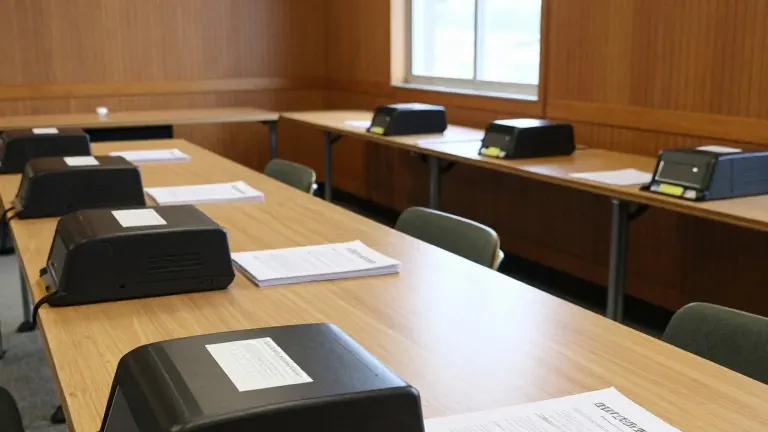
VanDenburg hopes that clear communication will keep tensions low on election day. She expects most poll workers to be local residents, which she believes will create a warm and welcoming environment for voters. In Barry County, a dozen people recently gathered for a three-hour training session. They learned to run vote-tabulating machines, check photo IDs, and process absentee ballots. VanDenburg thanked them for helping preserve democracy, a phrase that has taken on new weight as federal and local officials scrutinize every step of the voting process.
More Politics · World news · Report a business · Got a Story?