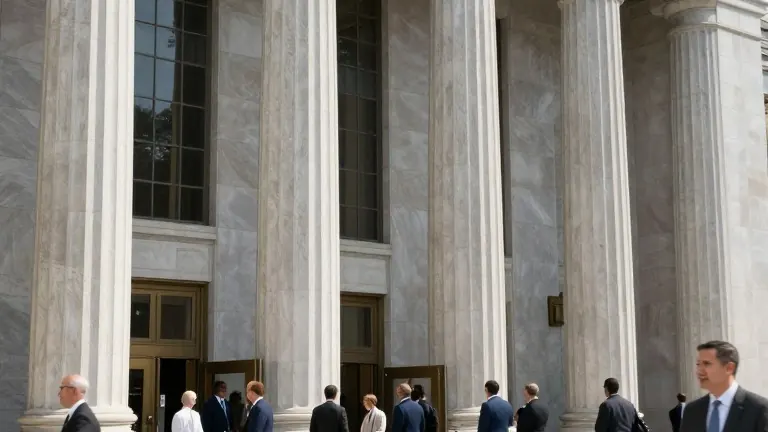
AI Reshapes Midterm Politics
Experts say artificial intelligence is now a central issue in races across the country, with candidates in both parties addressing voter concerns.
By Charles Reed ·
Artificial intelligence has emerged as a central issue in the current midterm election cycle.
Political science professor Chris Borick of Lehigh University said the topic has become a major factor in several races over the last few months.
He noted that the political rhetoric surrounding AI has shifted compared to previous attitudes toward new technologies.
"We like tech traditionally as part of our political economy. That’s really changed in the last year, where you see a much more neutral and sometimes negative political position on AI," Borick said.
Borick stated that the political calculus regarding AI has moved from positive to negative in both red and blue states following public backlash.
He said this shift reflects public attitudes about the effects of AI on society, the economy, and local communities.
Shobita Parthasarathy, a public policy professor at the University of Michigan, said both parties are tapping into AI concerns but with different approaches.
She noted that Republicans have maintained a closer position with AI companies over the past year.
"I do think that the Republicans have been over the last year plus, have been in a much more close position with the AI companies," Parthasarathy said.
She said Republicans generally focus on cost issues and are less likely to discuss broader issues or a moratorium.
Borick said that at the local level, conservatives and liberals often align in opposition to data centers or express concerns about AI.
He said this cross-partisan alignment creates the potential for political realignments that may be emerging now. A recent poll of Iowa and Ohio voters published online for SEMAFOR found the vast majority of voters want greater regulation of artificial intelligence.