
St. Johns River reaches 18.8 feet, highest level since 1953
Record flooding in Brevard and Volusia counties has trapped over 270 residents, forcing officials to deploy airboats and open emergency shelters.
By Mei Lin ·
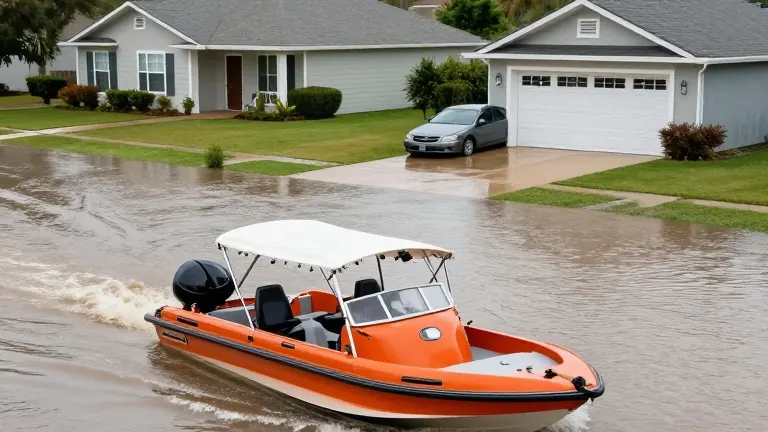
The St. Johns River in Florida has reached its highest recorded level since 1953. According to the National Weather Service in Melbourne, the river stood at 18.7 feet at 8:15 p.m. on Friday, November 20. A maximum reading of 18.8 feet was recorded during the previous 24 hours. The river’s major flood stage begins at 17 feet.
Forecasters expect the water level to remain near the 18.8-foot mark through the weekend and into early next week. The National Weather Service identified specific areas at high risk, including the Lake Poinsett area west of Cocoa, Silver Pines in Rockledge, and Shakespeare Park in Cocoa. The agency also warned that Providence Road could become impassable, restricting access to homes near Mullet Lane and Bass Road.
Rescue operations have become a primary method for moving people to safety. By 4 p.m. on Friday, officials reported that approximately 120 people had been rescued in Brevard County. In neighboring Volusia County, more than 150 people were pulled from water. Florida Fish and Wildlife Conservation Commission Lt. Grant Eller stated that about 80 FWC officers and 13 airboats were deployed to the area. These crews worked alongside the Brevard County Sheriff’s Office, Florida Highway Patrol, and Florida National Guard.
Christine Andrews was among those rescued on Friday. She spent the night inside her home in Cocoa as the water rose. Andrews told News 6 that she stayed on her bed because it was high enough to keep her dry while the rest of the house filled. She described everything else in the home as floating. Andrews said she remained until the water became too dangerous to escape alone, leaving with only clothes, a toothbrush, and toothpaste.
Another resident in Brevard County woke at 4 a.m. on Thursday to find eight inches of water inside her home. She said the water rushed in rapidly, causing her young son to panic. The family lost furniture, appliances, and vehicles to the rising water. The mother, who does not have flood insurance, said she is staying with relatives while trying to determine how to rebuild and secure transportation.
Jermaine Wilson lives with his 62-year-old mother in a neighborhood where the floodwater spread quickly. Although his home sits on higher ground, Wilson said the surrounding water stranded them. He estimated that water advanced halfway up his driveway in about an hour. Wilson described the situation as isolating, noting that leaving required a boat. He and his mother helped a driver whose vehicle became stuck in the floodwater.
The St. Johns River Water Management District is managing the volume of water in the Upper St. Johns River Basin. A statement from November 20 indicated that the district’s flood-control system is temporarily storing approximately 60 billion gallons of water. This water would otherwise flow downstream. The district is using controlled releases through the S-96 structure into the C-54 Canal to divert water toward the Indian River Lagoon.
The river flows across a very flat landscape, descending only about one inch per mile. This slow slope means floodwater moves gradually, keeping river levels elevated long after heavy rainfall ends. The district warned that it could take months for some sections of the river to fall below moderate flood stage. Strong northeast winds through Saturday and king tides beginning Sunday could also contribute to higher water levels in tidal portions of the river.
Volusia County officials declared a local state of emergency on Friday. They warned that major flooding is possible near DeLand, Astor, and portions of the river near Lake Harney. Some locations in that area may reach record levels. Brevard County has opened two emergency shelters for residents: the Walter Butler Community Center in Cocoa and the Joseph N. Davis Community Center in Melbourne. Both shelters are open to the general population, including people with special medical needs and families with pets.