
Rosa Parks Became First Woman to Lie in State Capitol Honors
Twenty years ago, civil rights icon Rosa Parks was given the highest honor available to a private citizen in Washington, D.C.
By Mei Lin ·
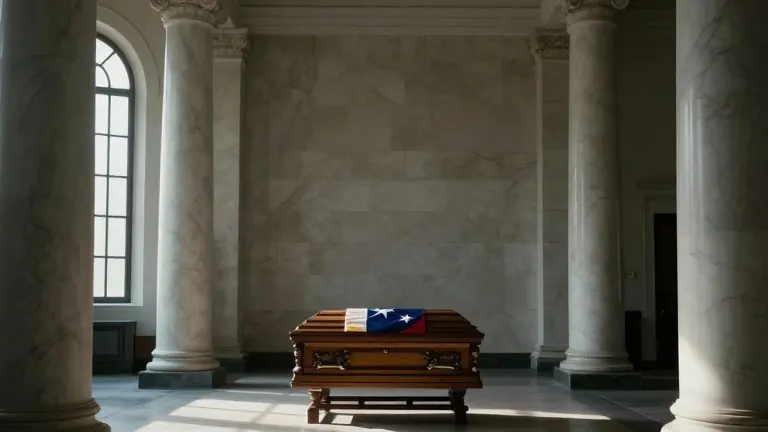
Rosa Parks, the Montgomery bus rider who helped spark the modern civil rights movement, was laid to rest in the U.S. Capitol rotunda in 2005. The ceremony made her the first woman to receive this specific honor. This distinction is reserved for individuals who have made exceptional contributions to the nation. Parks died in 2005 and her casket rested in the Capitol for public viewing.
The act of lying in honor is one of the highest tributes the government can bestow on a private citizen. It is typically granted to former presidents or distinguished military figures. Parks joined a very short list of non-presidential civilians to receive this recognition. Her presence in the Capitol symbolized the enduring legacy of her 1955 refusal to give up her seat on a segregated bus.
Her act of defiance in 1955 in Montgomery, Alabama, challenged the racial segregation laws of the time. This single moment catalyzed a broader movement across the United States. Parks became a global symbol of resistance and dignity. The Capitol ceremony in 2005 acknowledged her role in transforming American society decades after her initial protest.
Other historical events on October 30 include the 1912 death of Vice President James S. Sherman. Sherman died six days before the presidential election. He was running for a second term alongside President William Howard Taft. Taft eventually lost that election to Democrat Woodrow Wilson.
In 1974, Muhammad Ali knocked out George Foreman in Kinshasa, Congo. The fight, known as the Rumble in the Jungle, saw Ali regain the world heavyweight title. He defeated Foreman in the eighth round of a scheduled 15-round bout. Ali was 32 years old, while Foreman was 25.
The Soviet Union tested the Tsar Bomba hydrogen bomb in 1961. The weapon had a force estimated at about 50 megatons. This explosion was more than 3,500 times more powerful than the atomic bomb dropped on Hiroshima. It remains the most powerful nuclear weapon ever detonated.
In 2018, James Whitey Bulger was found dead in a federal prison in West Virginia. The 89-year-old Boston crime boss had been transferred to the facility just hours earlier. Three inmates later pleaded guilty to his killing.
Voters in Quebec rejected a sovereignty referendum in 1995. The vote was narrow and concerned a new economic and political partnership with Canada. The result kept Quebec as part of the Canadian federation.
In 1975, the New York Daily News ran the headline Ford to City: Drop Dead. This occurred one day after President Gerald R. Ford vowed to veto a federal bailout for New York City. The city was facing a severe fiscal crisis but avoided bankruptcy. In 1938, Orson Welles aired The War of the Worlds on CBS radio, causing panic among some listeners. A 1972 train collision on Chicago's South Side killed 45 people and injured about 350.