Halachic Debate Centers on Intent Behind Torah Scroll Creation
Medieval legal codes rule that a Sefer Torah written by a heretic must be burned because the scribe lacked the specific sacred intent required to sanctify the text.
By Mei Lin ·
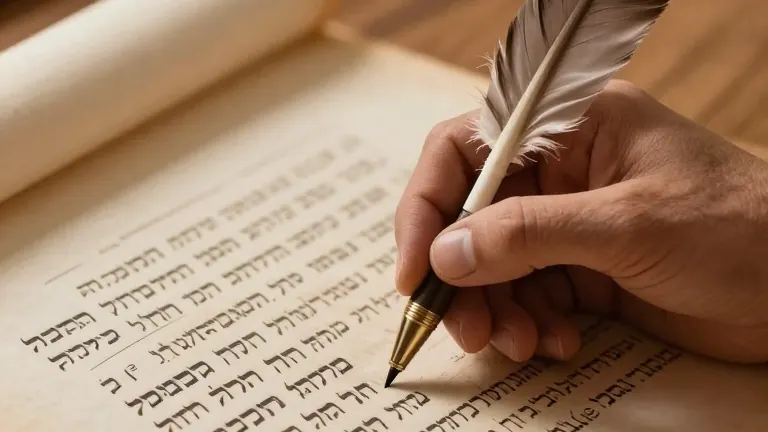
Jewish legal scholars have long debated the precise conditions under which a Torah scroll achieves sacred status. While physical attributes such as parchment and ink are necessary, recent analysis of classical texts suggests that the internal state of the scribe is equally critical. The core issue is whether the writer possessed the correct mindset while producing the letters.
The Gemara in Gittin 45b records the ruling of Rav Nachman that a Sefer Torah written by a min, or heretic, must be burned. This directive is striking because burning sacred writings is generally prohibited. The text notes that the scroll itself is destroyed despite the perfect formation of every letter on the parchment.
The Rambam, or Maimonides, provides the theoretical basis for this ruling in Hilchos Yesodei HaTorah 6:8. He argues that the prohibition against destroying sacred writing applies only to texts created by a Jew with sacred intent. If a heretic writes the scroll, even the names of God are burned. The Rambam explains that the writer did not write the text for its sacred purpose because he did not believe in the sanctity of the divine name. Consequently, the name did not become sanctified through the act of writing.
This legal position contrasts with the physical transformation of materials. Animal hide becomes parchment and ordinary ingredients become ink through standard processes. However, the Rambam teaches that physical changes alone do not create kedusha, or holiness. The sacred status emerges only through a halachically meaningful act performed by a person who understands they are creating something sacred. The hand matters because the mind behind the hand matters.
The Rambam further specifies qualifications in Hilchos Tefillin, Mezuzah V’Sefer Torah 1:13. He states that scrolls written by a min or an apikores must be burned. In other cases where the writer is not halachically qualified, the writing is placed in genizah rather than burned. The Rambam derives the basic qualification from the Torah, noting that the person writing must be commanded regarding the mitzvah and believe in it.
The Shulchan Aruch codifies this law in Yoreh Deah 281:1, affirming that a Sefer Torah written by an apikores is burned. This interpretation suggests that kedusha is not applied to parchment like a physical substance. Instead, the sacred nature of the writing depends on the intention of the scribe. The requirement is known as lishmah, which dictates what a kosher sofer must be thinking while writing.