FAA lifts nationwide ground stop after pilots manage in-flight disruptions
Former pilot John Cox explains how aircraft stayed airborne and why O'Hare and Reagan National faced capacity issues during the halt.
By Mei Lin ·
Passengers and crews experienced a disruption in air travel on November 13 after the Federal Aviation Administration issued a nationwide ground stop. The agency lifted the order earlier in the day, allowing normal operations to resume. During the halt, aircraft already in the air continued their flights while new departures were paused.
The FAA directed that en route aircraft maintain their destinations. This approach differed from previous security protocols where planes often diverted to the nearest airport. Controllers reported that the primary concern was not security, but the limited physical space available at major airports to accept landing aircraft.
John Cox, a former commercial airline pilot and aviation safety expert, noted that specific airports were struggling with ground capacity. He identified O'Hare International in Chicago and Reagan National in Washington as facilities that reported a shortage of space to park incoming planes. This constraint led to potential diversions and airborne holding patterns for some flights.
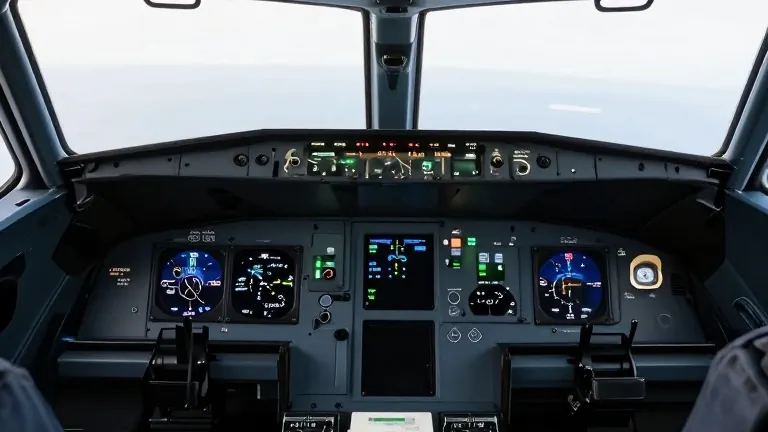
Cox described the immediate response of pilots who received the update while flying. He said the first step is to establish communication channels. Pilots check for data link capabilities through systems like ACARS or CPDLC. They also utilize backup radio frequencies to talk to other pilots if primary channels are compromised. These redundancies are built into the aviation system to handle such scenarios.
The expert explained that communication between pilots and air traffic control varies by flight phase. During the cruise phase over quiet airspace, contact with controllers may occur every eight to 20 minutes. In busy terminal airspace near congested airports, the flow of information is constant. A single frequency may serve up to 15 pilots simultaneously, with one pilot actively communicating with the controller at any given moment.
Cox stated that the investigation into the cause is in its early stages. Investigators are looking for commonalities among the affected en route traffic control centers. The system is designed to prevent single-point failures, so the team is examining how a problem in one center cascaded to others. They are checking for shared infrastructure, such as fiber optic cable routes, or new system implementations that might have contributed to the issue.
The FAA command center's decision-making process is also under review. Cox suggested that officials will analyze how the halt was ordered and lifted as a lesson-learned exercise. The immediate goal now is to reassemble the system and restore full normal operations across the national airspace.
For passengers who were in the air during the event, Cox recommended that pilots explain the situation clearly. He advised telling passengers that the air traffic control system is experiencing issues and that contingency procedures are in place. These procedures guarantee separation from other aircraft. He noted that flights would be slower in the air and on the ground at the destination, asking passengers to be patient and allow the system to function as designed.