Election officials in non-traditional battlegrounds brace for scrutiny
With key races spread across states like Iowa and Alaska, local clerks face heightened pressure and a renewed focus on error management.
By Mei Lin ·
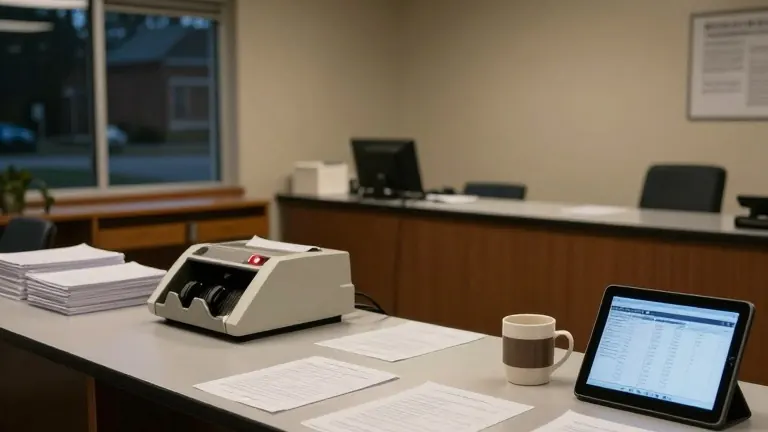
In 2020, Tina Barton, then the city clerk of Rochester Hills, Michigan, sent an unofficial absentee vote file twice because the initial transmission failed. The duplication did not alter the final vote count, and the tally was corrected the following day. However, the incident sparked national attention because Michigan was a pivotal state in that cycle. The chairwoman of the Republican National Committee accused Barton’s office of improperly assigning votes to Democrats. Barton also received death threats, including a voicemail claiming she deserved a knife to the throat for defrauding America of a real election.
Barton notes that human error is a constant in elections managed by tens of thousands of people. Common issues include machines failing to connect, poll workers arriving late, or voters receiving incorrect ballots. She explains that in non-battleground states, such mistakes are often easily explained in the press and rarely become major news stories. In swing states, however, the same errors can quickly evolve into narratives of widespread conspiracy.
This year’s midterm elections present a different dynamic for local officials. Because the races determining control of the U.S. House and Senate are dispersed across the country, officials in states like Iowa, Alaska, New York, and Kansas may face national scrutiny for the first time. Chris McGinn, executive director of the Texas Association of County Election Officials, says his team has been preparing clerks for this shift. Texas has been a reliable Republican state for nearly 50 years, which historically meant fewer competitive elections and less pressure on voting staff. McGinn notes that the state’s Senate race could decide the chamber’s balance of power, and the Republican nominee has sought to help President Trump overturn his 2020 loss.
McGinn tells his members that Texas does not want to repeat the circumstances of Florida in 2000. He observes that many officials still hold a mindset that major election controversies happen elsewhere. "We're still in a state of not thinking it can happen to us," McGinn said. "One of the things that I jokingly but realistically preach to our members is we don't want to be Florida in 2000."
Wendy Link, the supervisor of elections for Palm Beach County, Florida, says the threat environment for voting officials appears calmer than the period following the 2020 election. Her county includes part of a toss-up congressional district. Link receives what she calls "love letters" by email, some of which she believes are intended to intimidate her. She cited a message stating, "We're going to send our army to arrest you, you'll be spending your time in Guantanamo Bay." Despite these communications, Link says she is not currently requesting a security detail.
Barton, now vice president of the Committee for Safe and Secure Elections, warns that close midterms could escalate tensions again. The organization doubled the number of trainings it led in 2024 to prepare officials for worst-case scenarios. This expansion reflects new concerns regarding the Trump administration's actions in elections and a broader understanding of what it means to manage a battleground race. Researchers indicate that most false narratives about elections stem from real events, such as ballot equipment failures or website outages, which are then amplified by influencers and politicians to suggest intentional or widespread problems.
Barton’s advice to officials in competitive districts is straightforward. "I've told them all, you better be on your game," she said.